
- Your cart is empty
- Continue Shopping


$70.00 – $260.00
| Tablet/s | Price | Quantity | |
|---|---|---|---|
| 100 Tablet/s | $70.00 | ||
| 200 Tablet/s | $135.00 | ||
| 300 Tablet/s | $210.00 | ||
| 400 Tablet/s | $260.00 |
Cancer research is constantly evolving, uncovering new ways to understand how cells behave and replicate.
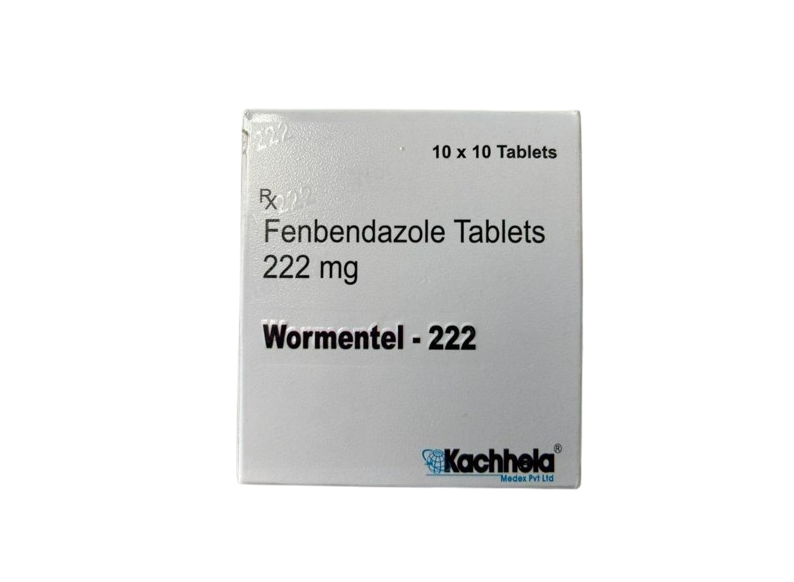
Among the compounds recently attracting laboratory interest is Fenbendazole 222 mg — a moderate-strength formulation being examined for its biochemical interactions with human cellular pathways linked to cancer biology.
Scientists studying Fenbendazole are not evaluating it as a therapy; rather, they are interested in how it interacts with microtubule structures inside cells and what that might reveal about cancer cell mechanics.
Fenbendazole belongs to a group of benzimidazole carbamates, compounds known to bind to β-tubulin, a protein responsible for creating microtubules—the scaffolding that allows cells to divide, transport nutrients, and maintain shape.
Abnormal microtubule formation is a well-known characteristic of cancer cell proliferation.
Researchers therefore examine Fenbendazole to see how it might influence this structure in experimental environments.
By modulating β-tubulin dynamics, Fenbendazole could help scientists observe alterations in cell-cycle control, spindle formation, and structural stability—critical elements of cancer progression studies.
Laboratory and pre-clinical studies investigating Fenbendazole 222 mg in cancer models typically focus on four potential mechanisms:
Each mechanism provides valuable information for understanding cancer cell biology, not for direct clinical application.
In controlled laboratory environments, scientists use Fenbendazole 222 mg because the dosage provides consistent bioactivity without excessive concentration.
Animal-free cell-culture and ex-vivo tissue models allow researchers to examine how the compound affects:
These studies are part of a broad pre-clinical research effort that also includes computer-based molecular docking and in-vitro microscopy imaging.
A growing number of peer-reviewed papers have referenced Fenbendazole’s role in oncology-related research, often highlighting:
Importantly, these outcomes are scientific data points, not clinical proof.
No health authority currently authorizes Fenbendazole for cancer treatment in humans.
| Strength | Research Purpose |
| Fenbendazole 150 mg | Introductory dose for short test cycles |
| Fenbendazole 222 mg | Balanced concentration for reproducible results |
| Fenbendazole 444 mg | Higher activity in extended trials |
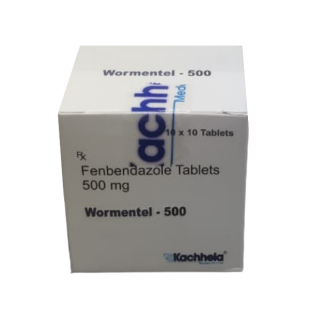
| Fenbendazole 500 mg – 1000 mg | Long-acting, intensive model exploration |
The 222 mg formulation offers a controlled middle ground—sufficiently potent for cellular observation while minimizing experimental variability.
Ethical researchers studying Fenbendazole follow strict laboratory protocols:
This framework protects research integrity and public understanding while ensuring data transparency.
Individuals sourcing Fenbendazole 222 mg for human research should:
✅ Select certified suppliers that publish third-party purity certificates.
✅ Verify the label clearly states “222 mg Fenbendazole.”
✅ Store tablets at 20–25 °C, away from moisture and sunlight.
✅ Use sealed containers to preserve analytical quality.
Such precautions guarantee reliability for laboratory or educational study.
Fenbendazole’s appearance in cancer research highlights a broader scientific trend: exploring non-traditional molecules that affect structural and metabolic pathways of abnormal cells.
As computational modeling and in-vitro testing advance, researchers can better map how compounds like Fenbendazole interact with cellular systems cancer research.
The coming years may reveal whether this interaction holds translational value for future oncology innovations—or simply enriches our understanding of cell biology.
Either way, Fenbendazole 222 mg is contributing to a more detailed picture of cancer mechanics.
| Tablet/s | 100 Tablet/s, 200 Tablet/s, 300 Tablet/s, 400 Tablet/s |
|---|---|
| Active Ingredient | Wormentel |
| Manufacturer: | Kachhela Medex Private Limited |
| Strength: | 222 Mg |
| Delivery Time: | 6 To 15 days |
Reviews
There are no reviews yet.